Book Appointment Now
Hemodialysis Treatment in Pune | Free Dialysis under MJPJAY & PMJAY
Hemodialysis: Complete Guide to Kidney Dialysis Treatment
What is Hemodialysis?
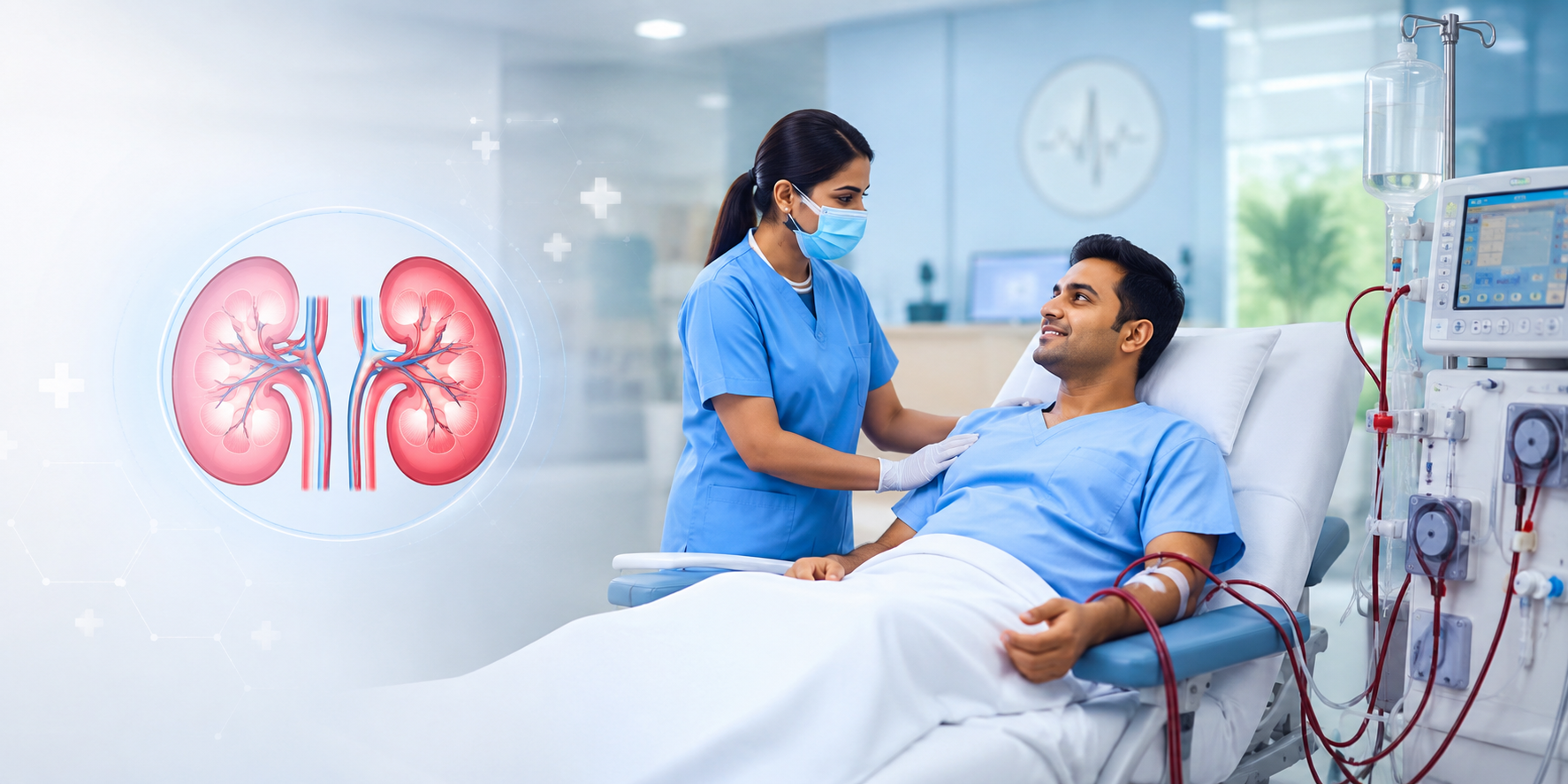
Hemodialysis is a life-saving medical treatment used to remove waste products, excess fluids, and toxins from the blood when the kidneys are no longer able to perform these essential functions effectively.
Healthy kidneys naturally filter blood and maintain the body’s balance of water, electrolytes, and minerals. However, in patients suffering from chronic kidney disease (CKD) or kidney failure, this function gradually declines. Hemodialysis performs the role of an artificial kidney by filtering the blood through a specialized dialysis machine.
At AB Swasthym Setu Care, we provide advanced Hemodialysis services using modern dialysis machines, experienced nephrologists, and trained dialysis technicians to ensure safe, comfortable, and high-quality patient care.
Who Needs Hemodialysis?
Hemodialysis may be recommended for patients diagnosed with:
- Chronic Kidney Disease (CKD)
- End Stage Renal Disease (ESRD)
- Acute Kidney Injury (AKI)
- Kidney Failure
- Severe electrolyte imbalance
- Fluid overload
- High potassium levels
- Uremia (toxin buildup in blood)
Your nephrologist will determine whether dialysis is required based on blood reports, kidney function tests, symptoms, and overall health condition.
Symptoms of Kidney Failure
Patients may experience one or more of the following symptoms:
- Persistent fatigue and weakness
- Swelling in legs, ankles, feet, or face
- Shortness of breath
- Nausea and vomiting
- Loss of appetite
- Difficulty concentrating
- Decreased urine output
- High blood pressure
- Muscle cramps
- Persistent itching
- Sleep disturbances
- Chest discomfort caused by fluid accumulation
If you experience these symptoms, consult a nephrologist immediately.
Common Causes of Kidney Failure
Kidney failure can develop due to various medical conditions, including:
Diabetes
One of the leading causes of chronic kidney disease worldwide.
High Blood Pressure
Uncontrolled hypertension gradually damages kidney blood vessels.
Chronic Kidney Disease
Progressive loss of kidney function over time.
Glomerulonephritis
Inflammation of kidney filters.
Polycystic Kidney Disease
A genetic disorder causing cyst formation in kidneys.
Kidney Infections
Repeated infections may permanently damage kidney tissue.
Urinary Tract Obstruction
Kidney stones, enlarged prostate, or tumors may block urine flow.
Certain Medications
Long-term use of some painkillers and medicines may affect kidney function.
How Does Hemodialysis Work?
Hemodialysis uses an advanced dialysis machine and a special filter called a dialyzer, often referred to as an artificial kidney.
The treatment works by:
- Removing waste products from the blood
- Eliminating excess water
- Maintaining electrolyte balance
- Controlling blood pressure
- Removing harmful toxins
The purified blood is then safely returned to the patient’s body.
Hemodialysis Procedure
The treatment generally follows these steps:
Step 1: Vascular Access
Blood is accessed through:
- AV Fistula (preferred)
- AV Graft
- Dialysis Catheter
Step 2: Blood Filtration
Blood flows into the dialysis machine where the dialyzer removes toxins, waste products, and excess fluid.
Step 3: Blood Returns to the Body
The cleaned blood is safely returned to the patient through the access site.
Step 4: Monitoring
Throughout the procedure, trained dialysis staff continuously monitor:
- Blood pressure
- Heart rate
- Fluid removal
- Patient comfort
A typical Hemodialysis session lasts 4–5 hours, usually performed 2–3 times per week, depending on the patient’s medical condition.
Benefits of Hemodialysis
Hemodialysis offers several important health benefits:
- Removes harmful toxins from the blood
- Eliminates excess body fluid
- Controls blood pressure
- Reduces swelling
- Improves breathing
- Restores electrolyte balance
- Enhances energy levels
- Improves appetite
- Supports a better quality of life
- Helps patients continue their daily routine safely
Government Scheme Supported Dialysis Services
At AB Swasthym Setu Care, eligible patients can receive Hemodialysis treatment under various Government Health Schemes, helping reduce or eliminate treatment costs.
Eligible schemes may include:
- Mahatma Jyotirao Phule Jan Arogya Yojana (MJPJAY)
- Pradhan Mantri Jan Arogya Yojana (PMJAY – Ayushman Bharat)
- PMC Urban Poor Healthcare Scheme (for eligible beneficiaries)
- Maharashtra Government Health Schemes
- Central Government approved healthcare schemes
Patients must satisfy the eligibility criteria and submit the required documents as per the applicable government guidelines.
Our team assists patients throughout the documentation and approval process to ensure a smooth treatment experience.
Why Choose AB Swasthym Setu Care?
We are committed to providing compassionate, affordable, and high-quality kidney care.
Our advantages include:
- Experienced Nephrologists
- Skilled Dialysis Technicians
- Advanced Dialysis Machines
- Hygienic & Infection-Controlled Environment
- Comfortable Dialysis Units
- Affordable Treatment Options
- Government Scheme Assistance
- Patient-Centered Care
- Emergency Dialysis Support
- Personalized Medical Guidance
Frequently Asked Questions (FAQs)
Is Hemodialysis painful?
No. Most patients experience minimal discomfort. The procedure itself is generally painless except for the initial needle insertion.
How long does one dialysis session take?
A standard Hemodialysis session usually takes 4 to 5 hours.
How many dialysis sessions are needed each week?
Most patients require 2 to 3 sessions per week, depending on their kidney function and medical advice.
Can Hemodialysis cure kidney disease?
No. Hemodialysis does not cure kidney disease, but it replaces essential kidney functions and helps patients live healthier and longer lives.
Is Hemodialysis available under government schemes?
Yes. Eligible patients may receive treatment under government-supported healthcare schemes such as MJPJAY, PMJAY (Ayushman Bharat), PMC Urban Poor Scheme, and other applicable state or central government programs.
Can I eat before dialysis?
Your nephrologist or dietitian will provide personalized dietary instructions based on your medical condition.
Is Hemodialysis safe?
Yes. Hemodialysis is a well-established and safe medical procedure when performed by qualified healthcare professionals using modern equipment.
Book Your Hemodialysis Appointment Today
If you or your loved one is experiencing kidney-related health issues, early consultation can help prevent complications and improve quality of life.
AB Swasthym Setu Care offers comprehensive Hemodialysis services with expert medical care, advanced technology, and support for eligible government healthcare schemes.
📞 Call Now: 9762124005